My experience
I’ve had headaches since I was 5 years old. Not your typical tension headaches that happen every once in a while but intense migraines all day everyday to this day. They affect my everyday life making it harder to engage in day to day activities, harder to focus in school, and harder to pursue hobbies. To stay ahead it’s important for me to manage my time wisely, plan ahead, and put in consistent effort everyday.
Overview
A chronic migraine is defined as having headaches for at least 15 days per month (with at least 8 of them having migraine symptoms) for at least 3 months. It is a disabling condition that significantly reduces quality of life. They interfere with school, work, personal hobbies, relationships, and everyday activities.
Symptoms
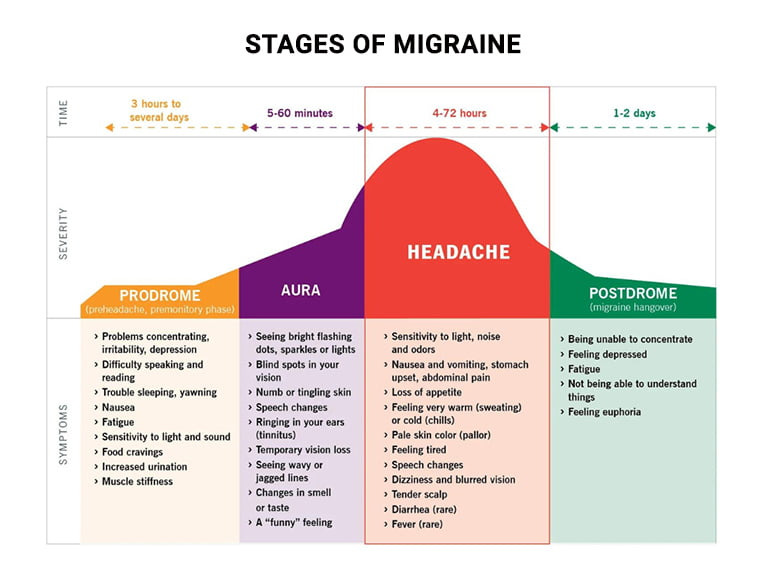
Prodrome
Occurs a few days to a few hours before a migraine and is known as the premonitory phase. This acts as a warning system and signals the start of a migraine. Common symptoms include:
- Irritability
- Mood changes
- Fatigue
- Frequent yawning
- Nausea
- Food cravings
- Sensitivity to light/sound
- Trouble concentrating
Aura
This phase involves several neurological symptoms that can last from 5 minutes to an hour before the headache phase begins. Common symptoms include:
- Tunnel vision
- Blind spots in vision
- Flashing lights
- Numbness
- Tingling
- Weakness
- Aphasia
- Dysarthria
- Vertigo
- Tinnitus
Acute
This phase is the peak of the migraine cycle characterized by an intense headache. It can last anywhere from 4 hours to days. Symptoms include:
- Intense headache (throbbing pain)
- Nausea/vomiting
- Sensitivity to light and sound
- Body aches
- Worsening of pain with movement
- Fatigue
Postdrome
This is the final stage of a migraine and is known as the “migraine hangover”. This stage can last from 24 to 48 hours. Symptoms include:
- Fatigue
- Trouble concentrating
- Brain fog
- Mood changes
Causes
The exact cause of migraines is not fully known but they are influenced by a combination of genetic, environmental, and lifestyle factors. Some common factors linked to migraines include:
- Family history: Migraines are hereditary and your risk increases significantly if a parent or family member has migraines. Around 60% of the reason for migraines is genes.
- Gender: migraines are more common in women
- Age: often starts during adolescence or early adulthood
- Medication overuse: overuse of medications particularly migraine specific medications can actually increase the frequency and intensity of migraines over time.
- Caffeine: some claim it provides relief others report that excessive caffeine consumption worsens migraines.
- Physical activity: can trigger or worsen migraines
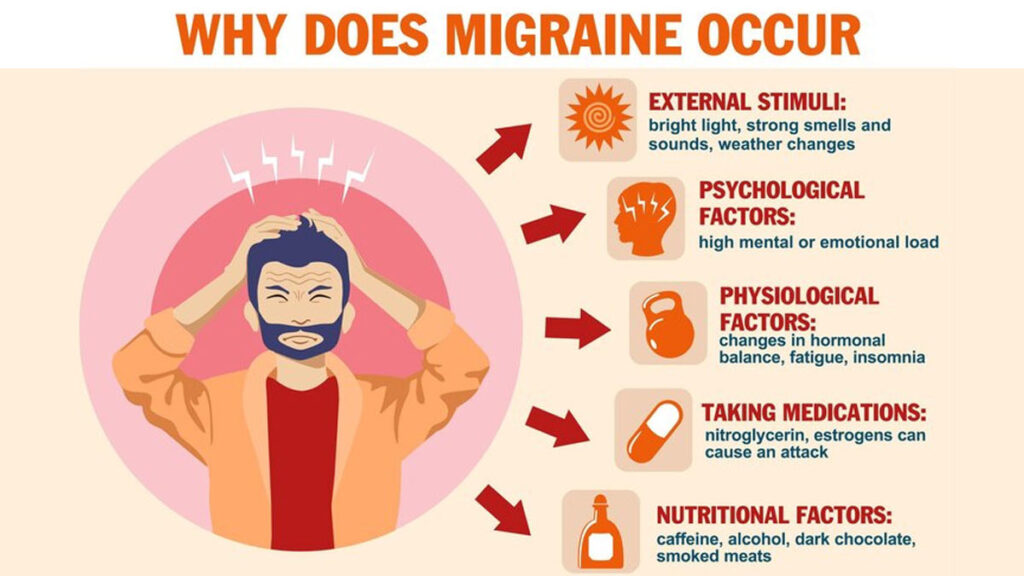
Trigger
Certain lifestyle habits and environmental factors can cause migraines. Common triggers include:
- Foods and drinks: stuff like caffeine, alcohol, processed meats, desserts, artificial sweeteners, etc
- Stress
- Environmental factors: change in weather, bright lights, or loud sounds.
- Irregular sleep: sleeping too little or too much or sleeping irregularly (not at the same time everyday or same amount)
- Dehydration
- Medication overuse
- Physical activity
Treatment
While there is no universal cure, there are medications that can help with pain and frequency. These medications generally fall into 2 categories: pain relieving medications and preventative medications. Pain relievers are taken during a migraine to relieve pain and reduce symptoms (aspirin, ibuprofen, triptans). Preventative medications are taken regularly to reduce frequency and intensity of migraines (antidepressants, anti seizure medications, Botox injections).
Sources
Chronic migraine. (2025, July 3). Cleveland Clinic. https://my.clevelandclinic.org/health/diseases/9638-chronic-migraine
Rathsack, S. (2024, September 17). The Phases of a Migraine Attack – Breaking it Down. Miles for Migraine. https://www.milesformigraine.org/phases-of-migraine-attack/
Chronic migraine – The Migraine Trust. (2026, February 8). The Migraine Trust. https://migrainetrust.org/understand-migraine/types-of-migraine/chronic-migraine/
Mayo Clinic Staff. (n.d.). Migraine: Diagnosis and treatment. Mayo Clinic. Retrieved May 28, 2026, from https://www.mayoclinic.org/diseases-conditions/migraine-headache/diagnosis-treatment/drc-20360207
Genetics and migraine – The Migraine Trust. (2026, February 8). The Migraine Trust. https://migrainetrust.org/understand-migraine/genetics-and-migraine/Chronic migraine. (2025b, July 3). Cleveland Clinic. https://my.clevelandclinic.org/health/diseases/9638-chronic-migraine