Overview
Alzheimer’s disease is the most common cause of dementia accounting for about 60-80% of cases. It’s a progressive brain disorder that destroys a person’s memory, brain function, and cognitive skills. There is currently no cure for Alzheimer’s though there are medications that can help manage symptoms or slow progression.
Causes
Alzheimer’s is caused by an excessive build up of proteins in and around brain cells. One such protein is called the beta-amyloid protein that comes from the breakdown of a bigger protein called the amyloid precursor. The build up of this protein causes plaques to form in the brain and those plaques hinder cell function.
The other protein is called tau which is responsible for neurofibrillary tangles inside neurons. Inside a typical neuron there are structures called microtubules that aid in guiding nutrients from the cell body to the axon and dendrites. Usually tau binds to these microtubules and helps stabilize them, but chemical changes cause tau proteins to instead bind with each other that eventually form tangles inside neurons. These tangles harms communication and transport between neurons.
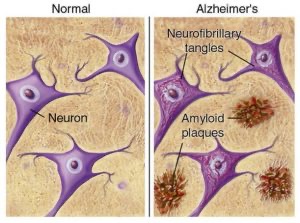
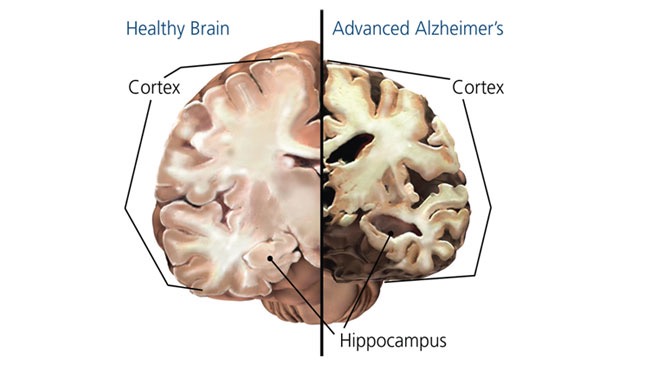
As the cells become affected there is a drop in the amount of neurotransmitters (chemical messengers that send signals between brain cells). Over time different areas of the brain get smaller and smaller. Most of the time one of the first things affected is the hippocampus which has an important role in memory.
Symptoms
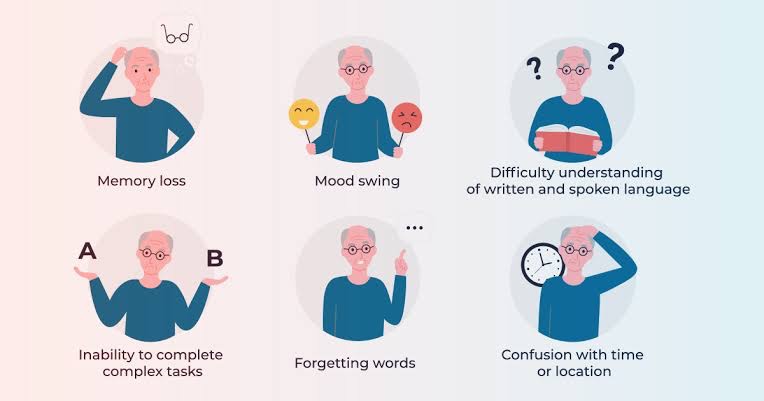
- Memory Loss
- Since one of the first things affected is the hippocampus it’s no surprise that one of the first symptoms is memory loss and difficulty processing new information.
- Thinking Problems
- Trouble concentrating, following a conversation, planning, organizing, doing everyday tasks, and getting confused on what the day is or where they are.
- Language Problems
- Having difficulty in finding the right words for communication. Needing pauses to think of a word or name that was once easily known.
- Mood Changes
People become more irritable, anxious, or sad, They become less social and engage less with activities they once enjoyed.
Treatment
Currently there is no cure for Alzheimer’s disease. However, certain medications can help manage symptoms and possibly slow progression of the disease. These medications include
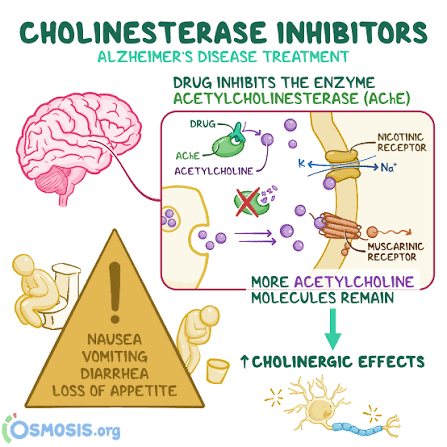
- Acetylcholinesterase (AChE) inhibitors
- These medications help to increase acetylcholine. Acetylcholine is a substance in the brain that helps neurons communicate with each other. They can have some side effects such as nausea or vomiting but they usually get better in 2 weeks.
- Memantine
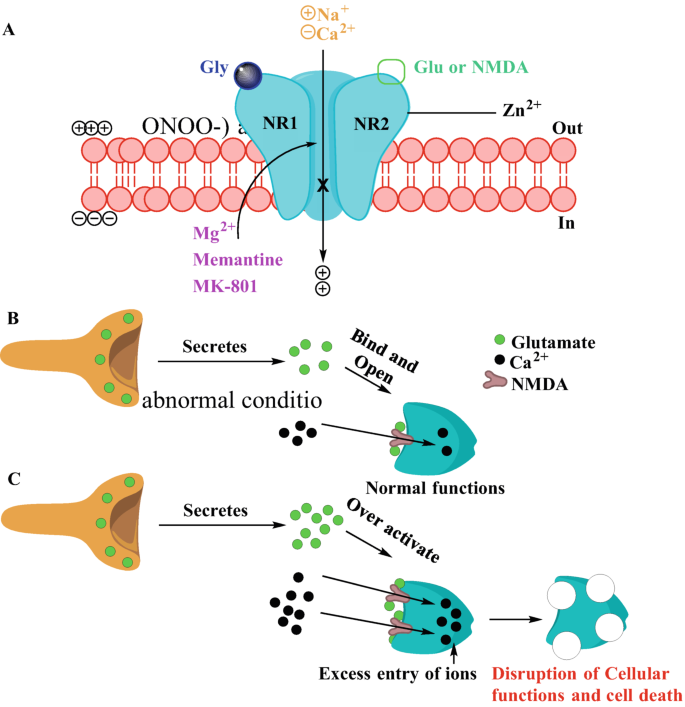
- Memantine works by regulating a chemical called glutamate. When you have excess glutamate it leads to increased brain cell death accelerating decline. Taking memantine slows progression and allows people to keep certain basic functions longer.
Sources
- Alzheimer’s disease – symptoms and causes – Mayo Clinic. (n.d.). https://www.mayoclinic.org/diseases-conditions/alzheimers-disease/symptoms-causes/syc-20350447
- What happens to the brain in alzheimer’s disease? | national institute on aging. (n.d.-b). https://www.nia.nih.gov/health/alzheimers-causes-and-risk-factors/what-happens-brain-alzheimers-disease
- Alzheimer’s disease – treatment – NHS. (n.d.-b). https://www.nhs.uk/conditions/alzheimers-disease/treatment/
- Symptoms of alzheimer’s disease | alzheimer’s society. (n.d.-c). https://www.alzheimers.org.uk/about-dementia/types-dementia/alzheimers-disease-symptoms
- How is alzheimer’s disease treated? | national institute on aging. (2023, September 12). https://www.nia.nih.gov/health/alzheimers-treatment/how-alzheimers-disease-treated