What is the thyroid gland and what does it do?
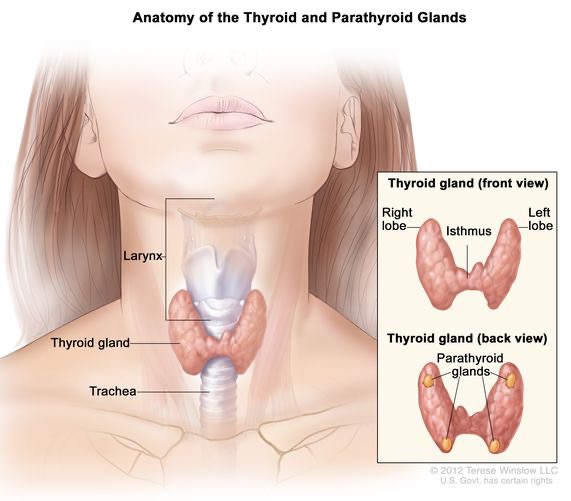
The thyroid is an endocrine gland that is responsible for making and secreting hormones. Hormones are chemical messengers that coordinate different bodily functions. They tell your body what to do and when to do it. The main job of the thyroid is to control your metabolic rate which is the speed at which your body burns calories.
What is Graves’ disease?
Graves’ disease is an autoimmune disease that can cause hyperthyroidism. In Graves’ disease, your immune system makes an antibody called thyroid-stimulating immunoglobulin (TSI). TSI connects to your thyroid cells and behaves like thyroid-stimulating hormone (TSH). TSH is a hormone made by your pituitary in the brain and it’s responsible for regulating the amount of thyroid hormone your thyroid makes. TSI, however, causes your thyroid to make too much thyroid hormone.
Symptoms
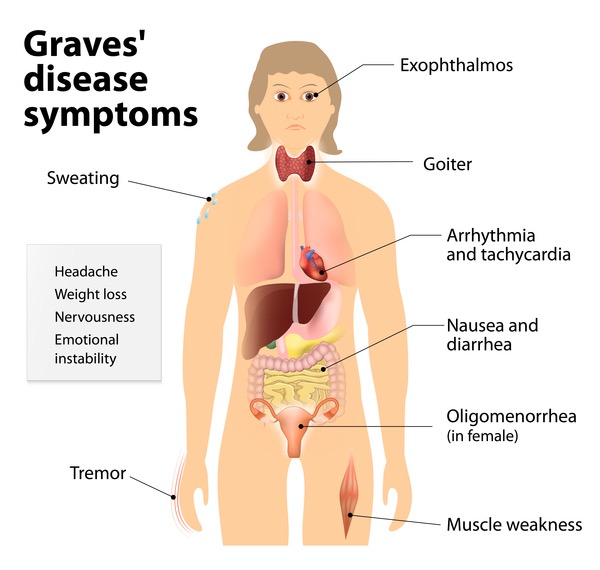
The onset of Graves’ disease symptoms is often gradual. Usually symptoms take weeks or even months to develop. These symptoms include:
- Rapid heartbeat
- Tremor
- Anxiety
- Diarrhea
- Weight loss
- Hair loss
- Insomnia
- Enlarged thyroid gland
Graves’ disease can also cause problems to your eyes. This is called Graves’ orbitopathy and about ⅓ of people with Graves’ disease develop it. Symptoms include:
- Bulging eyes
- Double vision
- Light sensitivity
- Pressure/pain in your eyes
Physiology of Thyroid Hormone
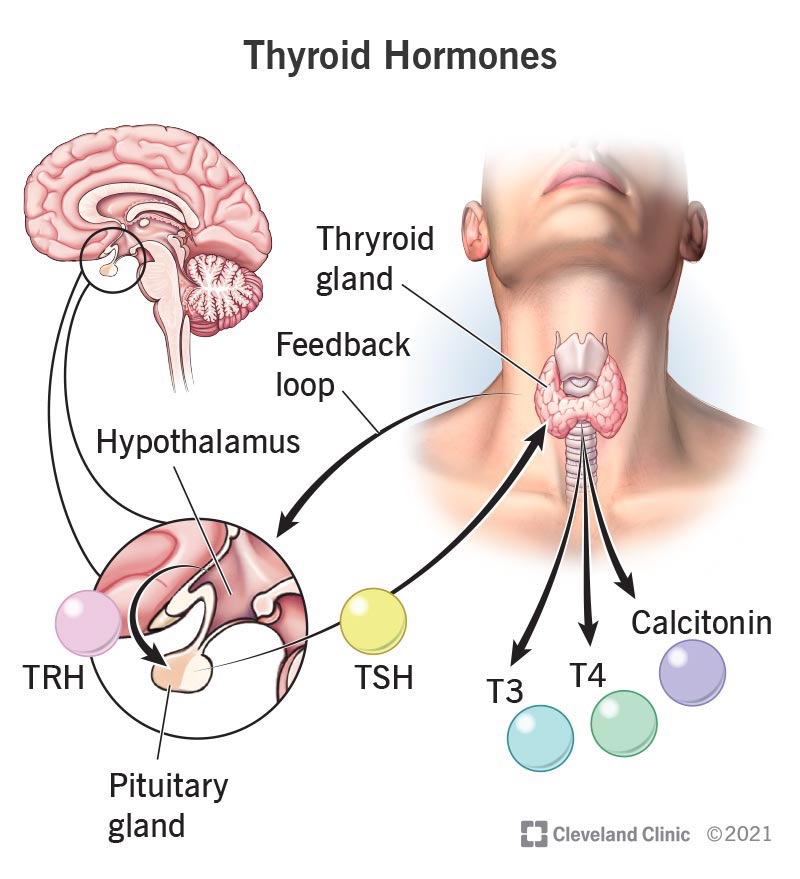
The thyroid hormone controls metabolism, growth, and many other functions. The main hormones produced by the thyroid gland are thyroxine or tetraiodothyronine (T4) and triiodothyronine (T3). 90% of hormones produced are inactive thyroid hormone, or (T4), and 10% are active thyroid hormone, or (T3). To start the feedback loop of thyroid hormone your hypothalamus releases thyroid-releasing hormone (TRH) which stimulates your pituitary gland to release TSH. TSH then triggers the production of T3 and T4. When levels of T3 and T4 increase they prevent the release of TRH and thus TSH. This feedback loop allows your body to regulate the amount of thyroid hormone and maintain homeostasis. Your thyroid also requires iodine to make T4 and T3.
Treatment
Treatment for Graves’ disease focuses on stopping the thyroid from making hormones or blocking the effects of them.
Radioactive iodine therapy: This involves taking radioactive iodine called radioiodione by mouth. It destroys the cells in your thyroid that make thyroid hormone. This leads to a shrunken thyroid gland and symptoms easing over several weeks to months. After this treatment people will need to take daily hormone medication to get the thyroid hormone your body needs.
Anti thyroid medication- Anti thyroid medicines block the thyroid from using iodine to make hormones.
Beta blockers: Beta blockers block the effect of hormones on the body.
Surgery- Surgery can be used to remove the thyroid. It’s called a thyroidectomy. However, with surgery you would need to take thyroid medicine for the rest of your life.
Sources
- professional, C. C. medical. (2026b, May 19). Thyroid: What it is, Function & Problems. Cleveland Clinic. https://my.clevelandclinic.org/health/body/23188-thyroid
- What is Graves’ disease? Cleveland Clinic. (2026, February 24). https://my.clevelandclinic.org/health/diseases/15244-graves-disease#symptoms-and-causes
- U.S. Department of Health and Human Services. (n.d.). Graves’ disease – niddk. National Institute of Diabetes and Digestive and Kidney Diseases. https://www.niddk.nih.gov/health-information/endocrine-diseases/graves-disease#causes
- Armstrong, M. (2023, March 13). Physiology, thyroid function. StatPearls [Internet]. https://www.ncbi.nlm.nih.gov/books/NBK537039/
- Shahid, M. A. (2023, June 5). Physiology, thyroid hormone. StatPearls [Internet]. https://www.ncbi.nlm.nih.gov/books/NBK500006/
- Mayo Foundation for Medical Education and Research. (2024a, June 14). Graves’ disease. Mayo Clinic. https://www.mayoclinic.org/diseases-conditions/graves-disease/diagnosis-treatment/drc-20356245