What is the Myelin Sheath
The myelin sheath is a layer of fat and proteins that wraps around nerve cells acting as a protective cover. However, the myelin sheath isn’t one big membrane; it’s a lineup of small, separate sections of myelin with very tiny gaps between them. Those tiny gaps are called the Nodes of Ranvier and have a high amount of voltage gated sodium channels. Those channels allow an action potential to be regenerated as it travels through the axon. However, It’s important to note that not all neurons have a myelin sheath.
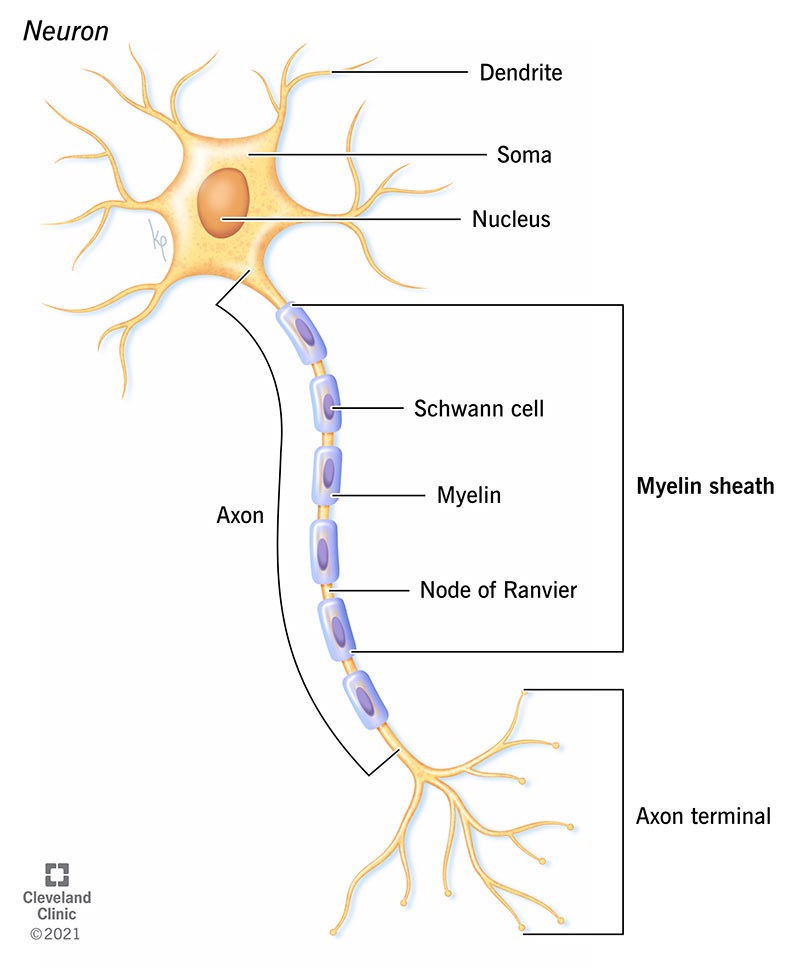
What does the Myelin Sheath do?
The myelin sheath has 3 main functions:
- It maintains the strength of the signal as it passes through the nodes of Ranvier
- its fatty-protein coating provides protective insulation for nerve cells
- It allows electrical signals/impulses to transmit quickly and efficiently along nerve cells
Multiple Sclerosis
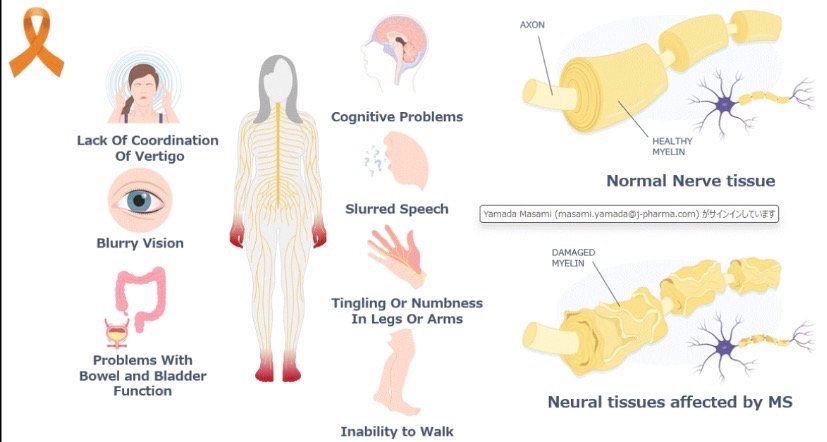
In Multiple Sclerosis (MS) myelin becomes damaged because your immune system identifies myelin as a foreign substance that has to be eliminated. The exact trigger that causes MS is unknown but many experts believe MS is an autoimmune disease. Your immune system creates an inflammatory response with the help of T and B cells. T cells become activated in the lymph system and release chemicals that cause inflammation
upon reaching the nervous system. They also help activate B cells. B cells mature into plasma cells and produce antibodies to boost T cell activity.
When the myelin sheath is damaged, nerve impulses slow down and can even stop. Since your brain can’t send signals properly throughout your body it leads to several neurological and physical symptoms. MS most commonly causes:
- Vision loss
- Muscle weakness
- Muscle spasms
- Loss of coordination
- Trouble walking
- Changes in bladder/bowel function
- Cognitive decline
Treatment
There is no cure for Multiple Sclerosis. Instead treatment is centered around managing symptoms, slowing progression, and managing attacks.
For example, during a MS attack you could be treated with corticosteroids which help to lower nerve inflammation. Or you could be treated with plasmapheresis which separates plasma and blood cells in the blood. The blood cells then get mixed with a protein solution called albumin and sent back into your bloodstream.
There are also treatments to help manage symptoms. These include muscle relaxants, medication to reduce fatigue, therapy, and medication to increase walking speed.
Sources
- Mayo Foundation for Medical Education and Research. (2024b, November 1). Multiple sclerosis. Mayo Clinic. https://www.mayoclinic.org/diseases-conditions/multiple-sclerosis/diagnosis-treatment/drc-20350274
- Empowering people affected by MS to live their best lives. National Multiple Sclerosis Society. (n.d.). https://www.nationalmssociety.org/understanding-ms/what-is-ms/how-ms-affects-the-brain/immune-mediated-disease
- The myelin sheath – developing expertise in neuroscience. (n.d.-k). https://uen.pressbooks.pub/expertneuro/chapter/the-myelin-sheath/
- professional, C. C. medical. (2026, April 14). Myelin sheath: What it is, Purpose & function. Cleveland Clinic. https://my.clevelandclinic.org/health/body/22974-myelin-sheath
- Mayo Foundation for Medical Education and Research. (2024b, November 1). Multiple sclerosis. Mayo Clinic. https://www.mayoclinic.org/diseases-conditions/multiple-sclerosis/symptoms-causes/syc-20350269